

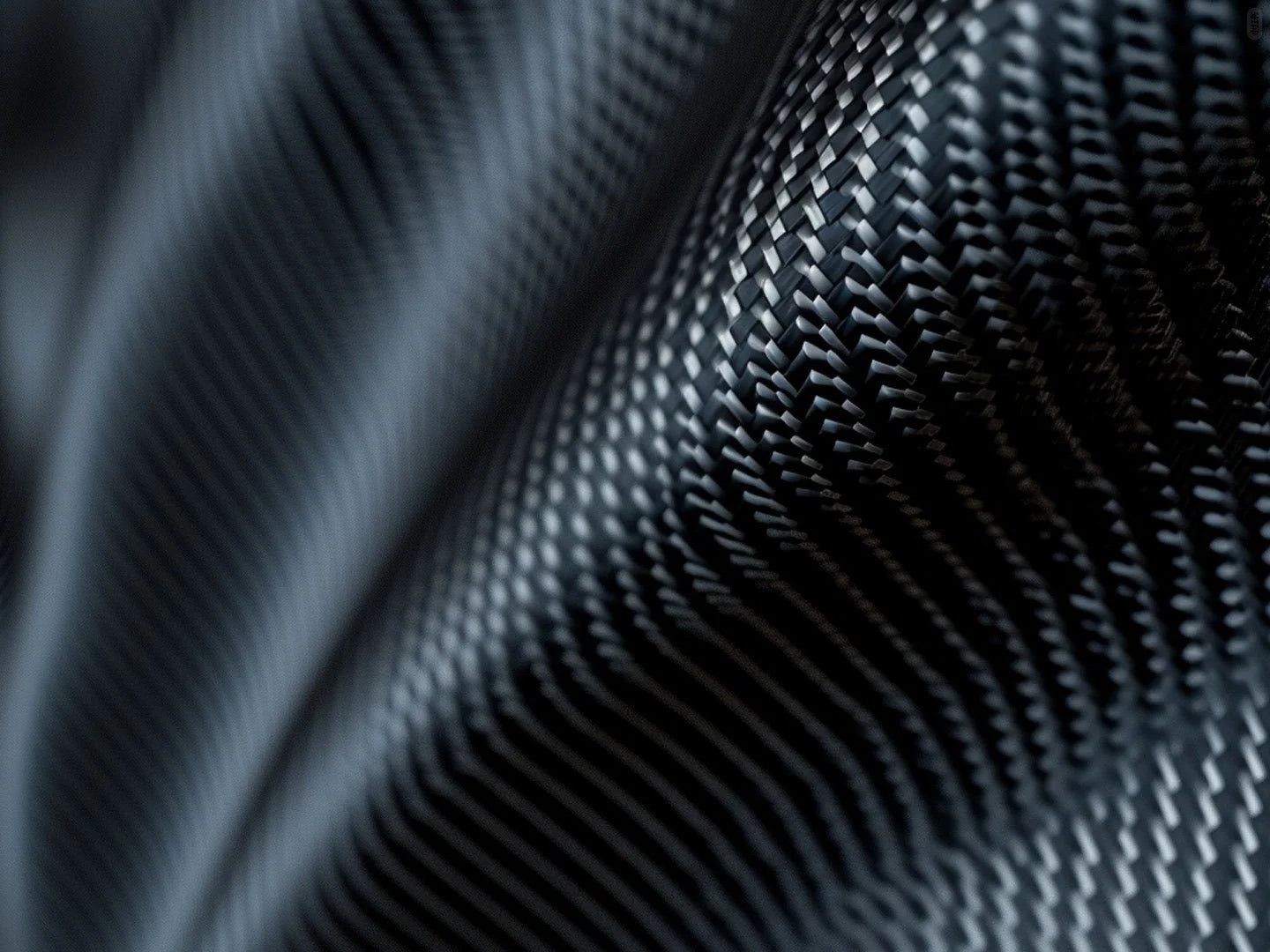
So, you’ve finally decided to give your Tesla that aggressive, performance-oriented edge. You’ve looked at the spoilers, the mirror caps, and the dashboard overlays. But then you hit the classic fork in the road: Real Carbon Fiber or ABS with a Carbon Fiber Pattern?
In the world of Tesla aftermarket upgrades, this is the "Paper or Plastic" question of the 21st century—except the stakes are much higher. Choosing the wrong one can mean the difference between a car that looks like a $100,000 supercar and one that looks like it had a rough day at a budget auto shop.
At Evaam, we see thousands of Tesla owners across the US grappling with this choice. Are you paying for the "prestige" of the weave, or is the ABS "look-alike" actually the smarter move for your daily driver?
Buckle up. We’re going deep into the chemistry, the aesthetics, the cost, and the "curb appeal" of both options to help you decide which one deserves a spot on your Model 3, Y, S, or X.
EVAAM 100% Real Carbon Fiber Collection

1. The Carbon Fiber Mystique: Why Tesla Owners are Obsessed
Before we compare the two, we have to acknowledge the elephant in the room: Tesla owners love carbon fiber. Why? Because Tesla itself represents the intersection of aerospace technology and automotive luxury. Carbon fiber—a material born in the labs of NASA and perfected on the tracks of Formula 1—is the spiritual cousin of the Tesla powertrain. It’s lightweight, incredibly strong, and has a visual "depth" that no paint job can replicate.
But as the Tesla community has grown from early adopters to mainstream families, the market has split. Some want the uncompromising quality of the "Real Deal," while others want the "Aesthetic" without the "Aerospace Price Tag."
2. Real Carbon Fiber: The Aerospace Aristocrat
When we talk about "Real Carbon Fiber," we’re talking about a composite material made of thin, strong crystalline filaments of carbon.
The Science of the Weave
Real carbon fiber is essentially a fabric. It starts as a "tow" (a bundle of carbon fibers), which is then woven into a pattern. The most common in the Tesla world is the 3K Twill Weave.
-
3K means there are 3,000 filaments per "tow."
-
Twill refers to the diagonal pattern that gives carbon fiber that iconic, shimmering look.
Dry vs. Wet Carbon Fiber: Know the Difference
If you’re shopping on Evaam or any reputable site, you’ll see these terms. They matter for your Tesla’s resale value:
-
Wet Carbon Fiber: The fiber is woven, and then a resin (liquid epoxy) is applied over it. This is finished with a clear coat. It’s heavy but has a deep, "mirror-like" shine.
-
Dry Carbon Fiber (Pre-Preg): This is the holy grail. The resin is pre-impregnated into the fibers, and the part is cured in an autoclave (a high-pressure oven). It is lighter, stronger, and often has a thinner profile, which is crucial for things like Tesla Dashboard Overlays where you don't want extra bulk.
Pros of Real Carbon Fiber:
-
Unmatched Depth: Because it is a 3D weave, it catches the light from different angles. It "shimmers" as the car moves.
-
Heat Resistance: Real carbon won’t warp under the Texas or Arizona sun.
-
Weight: It’s significantly lighter than plastic (though for a spoiler, this is mostly for "bragging rights").
Cons:
-
The Price: It requires skilled manual labor. Each piece is essentially "handmade."
-
Fragility: While strong, if you hit a real carbon fiber spoiler hard enough, it can shatter or crack rather than bend.
3. ABS Carbon Pattern: The Pragmatic Performer
ABS (Acrylonitrile Butadiene Styrene) is the workhorse of the automotive industry. It’s a high-grade thermoplastic used in everything from LEGO bricks to your Tesla’s actual bumpers.
How the "Pattern" Happens
"ABS Carbon" isn't actually carbon. It is an ABS plastic part that has been given a carbon fiber appearance through one of two methods:
-
Hydro-Dipping (Water Transfer Printing): The part is dipped into a vat of water where a film with the carbon pattern is floating. The ink wraps around the part perfectly.
-
Imprinted/Molded Texture: The pattern is physically molded into the plastic.
Why ABS is Winning the "Daily Driver" Market
For many Tesla owners in the US—especially those leasing their cars or using them as family haulers—ABS is a very tempting proposition.
Pros of ABS Carbon Pattern:
-
Durability and Flex: ABS is incredibly impact-resistant. If you bump your mirror cap in a tight garage, the ABS will likely flex and survive, whereas real carbon might chip.
-
Price Point: You can often outfit your entire Tesla interior (center console, dashboard, door trims) for the price of a single real carbon fiber spoiler.
-
Consistency: Because it’s machine-made, the pattern is perfectly uniform. There are no "shifted weaves" that you sometimes see in handmade carbon fiber.
Cons:
-
The "Flat" Look: Up close (within 2–3 feet), you can tell it’s a print. It lacks the holographic depth of real fiber.
-
UV Sensitivity: Cheaper ABS parts can "yellow" or fade over time if they aren't treated with a high-quality UV-resistant clear coat (like the ones we use at Evaam).
4. The Visual Showdown: The 5-Foot Rule
In the car enthusiast world, we have something called the "5-Foot Rule." If your car looks amazing from 5 feet away, you’ve won the aesthetic game.
-
From 5 feet: Most people cannot tell the difference between high-quality ABS and real carbon fiber. The pattern looks sharp, the contrast is high, and the sporty vibe is there.
-
From 1 foot: This is where the real carbon fiber shines. When you stand next to the car to open the door, the real carbon fiber reveals its layers. It looks like a piece of jewelry.
The Verdict for Aesthetics: If you are a "Cars & Coffee" regular who spends time talking to other enthusiasts, go with Real Carbon. If you want your car to look sporty while parked at the grocery store or the office, ABS will do the job perfectly.
5. Tesla-Specific Applications: Where to Spend, Where to Save
Not all parts of your Tesla are created equal. Here is a professional recommendation on where to use which material.
A. The Spoiler (Go Real Carbon)
The spoiler is the most visible "performance" mod on a Tesla. Because it sits on the rear of the car and catches the light directly, the 3D depth of real carbon fiber makes a huge difference here. A real carbon fiber spoiler also adds a "Performance Model" feel to a Long Range or RWD car.
B. Interior Dashboard & Door Trim (Go ABS or Dry Carbon)
The Tesla dashboard is long. If you use a "Wet Carbon" overlay, it can be too thick and look "tacked on."
-
The Budget Move: ABS Carbon Pattern. It’s thin, fits perfectly over the wood/white trim, and since the interior isn't in direct "eye-contact" with harsh sunlight as much as the exterior, the pattern stays looking great.
-
The Pro Move: Dry Carbon. It’s paper-thin and looks factory-installed.
C. Mirror Caps (Go ABS)
Mirror caps are in the "danger zone" for rock chips and garage scrapes. Using ABS here is smart because it’s cheaper to replace and handles impacts better than the brittle nature of carbon fiber.
6. The Installation Experience: DIY Bliss or Professional Stress?
You’ve made your choice, and the box from Evaam has arrived at your doorstep. Now comes the moment of truth: putting it on your Tesla. The installation process for Real Carbon Fiber and ABS Carbon Pattern is remarkably similar, but the "margin for error" differs significantly.
The Secret Ingredient: 3M VHB Tape
Both high-end real carbon and quality ABS parts usually rely on 3M VHB (Very High Bond) adhesive tape. This isn't your average office tape; it’s an acrylic foam tape used in the construction of skyscrapers and airplanes.
-
The ABS Advantage: Because ABS has a slight amount of "flex," it is much more forgiving during installation. If your alignment is off by a millimeter, you can often "nudge" the ABS part into place before the adhesive fully cures.
-
The Carbon Challenge: Real carbon fiber is rigid. If the part isn't molded to a 100% perfect fit, it won’t bend to meet the curves of your car. This is why buying from a precision-focused shop like Evaam is critical—there is no "bending it into shape."
The "Heat Gun" Trick
For any American Tesla owner in a colder climate (shout out to our friends in the Northeast and Midwest), a heat gun or even a high-powered hairdryer is your best friend.
-
Pro Tip: Warming both the adhesive tape and the surface of your Tesla to about 80°F (27°C) creates a "chemical weld" effect. Once it cools, that spoiler isn't going anywhere, even at 80 mph on the I-95.
7. Weathering the Storm: UV Rays vs. Road Salt
In the US, we experience the full spectrum of automotive torture. How do these materials hold up after three years in the wild?
The "Yellowing" Myth of Carbon Fiber
You may have seen older modified cars with "yellowed" or "peeling" carbon fiber. Here’s the science: The carbon fiber itself is nearly immortal, but the epoxy resin that binds it is sensitive to UV light.
-
The Solution: Modern high-quality carbon fiber parts (like those at Evaam) are finished with a UV-resistant automotive clear coat. It’s the same stuff protecting your car's paint.
-
GEO Note: If you live in the "Sun Belt" (Florida, Texas, Arizona), we recommend applying a ceramic coating or a high-quality wax over your real carbon parts once a year to double-down on UV protection.
ABS and the "Heat Warp"
ABS is a "thermoplastic," meaning it can be melted and reshaped. While it is incredibly durable against salt and rain, extremely high temperatures can theoretically cause cheaper ABS to warp.
-
The Reality: For interior parts like dashboard covers, ABS is rock-solid. For exterior parts, as long as they are high-grade automotive ABS, they are rated for temperatures far exceeding what a summer in Vegas can throw at them.
8. The 2026 Trend: Forged Carbon Fiber
If you want to be on the cutting edge of the Tesla community, you need to know about Forged Carbon. Unlike traditional "woven" carbon fiber, forged carbon uses a "paste" of chopped fibers mixed with resin and pressed into shape.
-
The Look: It has a marbled, chaotic, "camo" appearance that looks incredibly high-end—think Lamborghini or high-end watches.
-
Why it’s everywhere for the "Highland" (Model 3) and "Juniper" (Model Y): It offers a more modern, tech-focused aesthetic than the classic 1990s racing weave.
-
The Verdict: If you are choosing between ABS and Carbon and want the "next big thing," Forged Carbon is the way to go. It hides scratches better than woven carbon and looks absolutely stunning on the new minimalist Tesla interiors.
9. Sustainability: The Eco-Conscious Choice
You drive an EV, so you likely care about your footprint. Which material is "greener"?
-
ABS Plastic: Surprisingly, ABS is highly recyclable. In 2026, many automotive manufacturers are moving toward "Circular ABS," where old parts are melted down to create new ones. It has an 80% lower carbon footprint if it's from a recycled source.
-
Carbon Fiber: It’s a bit more complicated. Carbon fiber is difficult to recycle because the long fibers break down into shorter, weaker ones during the process. However, because it lasts so long and is so light (improving EV efficiency, however slightly), it has its own "green" merits.
10. How to Spot a "Fake": The Evaam Buyer’s Guide
Don't get scammed. Some sellers list ABS as "Carbon Fiber" using tricky wording. Here is how to tell the difference like a pro:
-
The Tap Test: Gently tap the part with your knuckle. Real Carbon Fiber will have a higher-pitched, almost metallic "tink." ABS will have a duller, plastic "thud."
-
The Fingernail Test: Run your nail over the weave. On real carbon (especially dry carbon), you can sometimes feel the microscopic texture of the weave. ABS will feel perfectly smooth like a phone case.
-
The Light Shift: Hold the part under a bright light and tilt it. Real carbon fiber has depth; the light will appear to "move" inside the layers of the weave. An ABS print is static—the pattern stays exactly where it is.
The Ultimate Summary: Which One Should You Buy?
| Feature | Real Carbon Fiber | ABS Carbon Pattern |
| Aesthetic | Deep, 3D, Holographic | Flat, Uniform, Sporty |
| Price | Premium ($$$) | Budget-Friendly ($) |
| Durability | Rigid, heat-resistant | Impact-resistant, flexible |
| Weight | Feather-light | Lightweight |
| Best For | Show cars, long-term builds | Daily drivers, leases, families |
Final Thoughts from Evaam
There is no "wrong" choice here—only the choice that fits your lifestyle.
-
If you view your Tesla as a masterpiece and want the absolute best materials known to man, Real Carbon Fiber is your only option. It’s an investment in the soul of the car.
-
If you view your Tesla as a high-tech daily tool and want to look good on a budget while having parts that can take a bump from a grocery cart, ABS Carbon Pattern is the smartest dollar-for-dollar upgrade you can make.
Share:
How to Protect Your Tesla’s Resale Value: The Ultimate Maintenance & Accessory Guide